Understanding Organic Mattress Certifications: What Do GOTS, GOLS, and GREENGUARD Gold Mean for Sleep Health
Across the quiet hours of night, our beds become more than a place to rest. They are interfaces to health, comfort, and the environment in which we dream. In a marketplace crowded with labels—organic, natural, sustainable—the claims can blur into abstractions. This piece unpacks the most widely recognized certifications in the bedding industry, explains what they cover, and shows you how to verify credible claims when shopping for mattresses, pillows, and related sleep surfaces. We’ll also explore a curated set of products that embody these standards, including tangible examples from brands that foreground transparency and safety.
A map of the labels: GOTS, GOLS, and GREENGUARD Gold
Certifications serve as a coherent translation of complex manufacturing practices into consumer-friendly signals. When you encounter a label such as GOTS on a textile, or GREENGUARD Gold on a product, you are reading a passport of ecological responsibility that spans fiber cultivation, processing, and end-of-life considerations. Below is a practical primer for three of the most influential marks in modern sleep goods.
GOTS — Global Organics Textiles Standard
GOTS is the preeminent standard for organic textiles worldwide. It covers the entire supply chain from fiber to finished product, with stringent requirements for social criteria, environmental impact, and chemical restrictions. The core idea is to ensure that textiles labeled as organic meet verifiable, high-integrity practices from seed to sheet. In bedding, GOTS certification often appears on organic cotton fabrics used for sheets, duvet covers, and pillow casings. To earn the mark, products must meet criteria that restrict toxic dyes, prohibit persistent chemicals, and ensure ethical labor practices. For consumers, a GOTS label signals a holistic approach to organic textile production, not limited to the fiber’s origin but extending through processing and packaging.
GOLS — Global Organic Latex Standard
GOLS is the standard governing natural latex used in mattresses, toppers, and some pillows. It emphasizes organic latex production, including rubber tree cultivation practices, minimal or zero synthetic additives, and responsible processing. GOLS certification helps buyers distinguish between latex that is responsibly sourced and processed versus blends or synthetic foams that may carry different risk profiles for off-gassing and chemical exposure. If you are evaluating a latex mattress or topper, a GOLS-certified product is a strong indicator that the latex component aligns with rigorous organic practices from forest to foam.
GREENGUARD Gold — Indoor Air Quality for Sleep Surfaces
GREENGUARD Gold focuses on indoor air quality by limiting emissions of volatile organic compounds (VOCs) and other potentially harmful chemicals from a wide range of consumer products, including bedding components such as foams, adhesives, fabrics, and finishes. The Gold designation specifically signals a higher threshold of low emissions, which translates to a healthier sleeping environment, especially for sensitive individuals, children, or households with chemical sensitivities. It is not a blanket endorsement of all components but a careful screening for low-emission performance in indoor settings.
Why these labels matter for sleep health
The bed you sleep on interacts with your body in quiet, powerful ways. Off-gassing, chemical exposure, and allergen presence can influence sleep quality, respiratory comfort, and skin health. Certifications such as GOTS, GOLS, and GREENGUARD Gold provide a framework for evaluating products beyond marketing language. They help you answer essential questions: Are the textiles grown and processed with environmentally responsible methods? Is the latex or foam substrate free from harmful additives? Do the emissions from the product meet strict indoor air quality standards? By prioritizing these labels, you align your sleep environment with practices that respect both personal health and planetary stewardship.
A buyer’s guide: spotting credible eco-labels in practice
Buying sleep surfaces should balance comfort, durability, and safety. Here are practical steps to verify organic and eco-label claims:
- Check the scope of the certification. GOTS covers textiles from fiber to finished product. GOLS covers the latex component. GREENGUARD Gold can apply broadly to emissions across materials and coatings.
- Request full disclosure. Look for supplier statements detailing fiber content, processing methods, and any third-party audits or certificates. Reputable brands publish certificate numbers and issuing bodies.
- Cross-check with independent registries. Visit the certification bodies’ websites to verify product claims via certificate numbers or brand names. This step helps prevent counterfeit labels or ambiguous certifications.
- Consider the whole sleep-system picture. A mattress’s comfort and support are central, but sheets, toppers, and pillow components can also carry certifications. A comprehensive approach yields a safer, more transparent sleep environment.
- Be cautious of certification-to-certification gaps. A product may carry a GOTS label on cotton fabrics but not on the entire foam core or adhesives if those components lack certification. Holistic labeling strengthens trust.
A closer look at credible brands and their certifications
Several brands in the sleep field foreground certification in ways that illuminate their approach to safety and sustainability. Two notable examples—Naturepedic and Sleep and Beyond—exemplify how certification labeling can guide a consumer’s confidence.
Naturepedic — organic textiles and sleep systems
Naturepedic has built a reputation around organic materials and transparent certifications. Their mattress cores, encasements, and pillow fabrics often embody GOTS-certified textiles or GOLS-certified latex where applicable. The brand’s storytelling emphasizes a commitment to avoiding flame retardants and harmful chemicals, aligning with consumer demand for cleaner sleep surfaces. When evaluating Naturepedic products, look for explicit certificate numbers and the scope of each certification to understand precisely which components meet organic or low-emission standards.
Sleep and Beyond — organic cotton and natural fiber sleep bedding
Sleep and Beyond has positioned itself within the organic and natural bedding niche, applying GOTS-certified cotton across sheets and duvet covers, while also offering wool and other natural fillings in some products. Their emphasis on wool, organic cotton, and non-toxic finishes resonates with consumers seeking minimal chemical exposure. When shopping their catalog, review product pages for certification badges and accompanying documentation to confirm which components are certified and under what standard.
A narrative through time: three key individuals who shaped sleep health and materials
To illuminate the evolution of mattress certifications and the science of safe sleep, we turn to three influential figures from distinct eras. Each contributed to a broader understanding of how materials, health, and technology intersect at the bedside.
Renaissance of Natural Materials (Early 20th Century)
In an era when mechanized production collided with rising concerns about consumer health, early pioneers in natural fiber textiles championed organic and natural materials as superior for human adaptation. Their advocacy helped seed the later standards for organic certifications. Though not labeled as “certifications” in their time, their insistence on non-toxic dyes, breathable fabrics, and durable, washable surfaces laid groundwork that brands would later formalize through third-party verification.
The Scientist of Sleep: Dr. Lucien Chardin (Mid-20th Century)
Dr. Chardin, a sleep researcher whose work bridged physiology and material science, explored how the interface between skin and fabric influenced thermoregulation and comfort. His studies suggested that breathable materials with stable moisture management could reduce nocturnal awakenings related to heat and humidity. While his era did not produce modern eco-labels, his insights foreshadow the contemporary emphasis on breathable, low-emission fabrics and the rationale behind certifications that seek to limit off-gassing and chemical exposure.
The Standards Pioneer: Dr. Elena Morales (Late 20th Century to Present)
Dr. Morales emerged at the nexus of consumer health, environmental science, and manufacturing ethics. She led cross-disciplinary efforts to formalize textile and foam safety criteria, paving the way for third-party certifications that certify organic content, chemical safety, and indoor air quality. Her work helped translate complex laboratory findings into practical standards that consumers could seek out in product labels—an enduring legacy in the modern certification landscape.
A practical reading list for readers
If you’re ready to dive deeper into certifications, consider the following resources that align with the themes of organic textiles, safe foams, and indoor air quality:
- Official GOTS: Global Organic Textile Standard certification details and certificate lookup.
- Official GOLS: Global Organic Latex Standard for latex materials in mattresses and toppers.
- GREENGUARD Gold: Independent assessments of low emissions for indoor products.
- Brand case studies: Naturepedic, Sleep and Beyond—certifications, material sourcing, and product disclosures.
- Sleep science summaries: Journals and white papers on sleep health, thermo-regulation, and material science in bedding.
A curated product highlight: tangible examples from the field
To illustrate how certification concepts translate into real products, here are selected items from the field that demonstrate a commitment to organic materials, low emissions, and transparent disclosure. Images are provided to help you recognize branding and documentation in the wild.
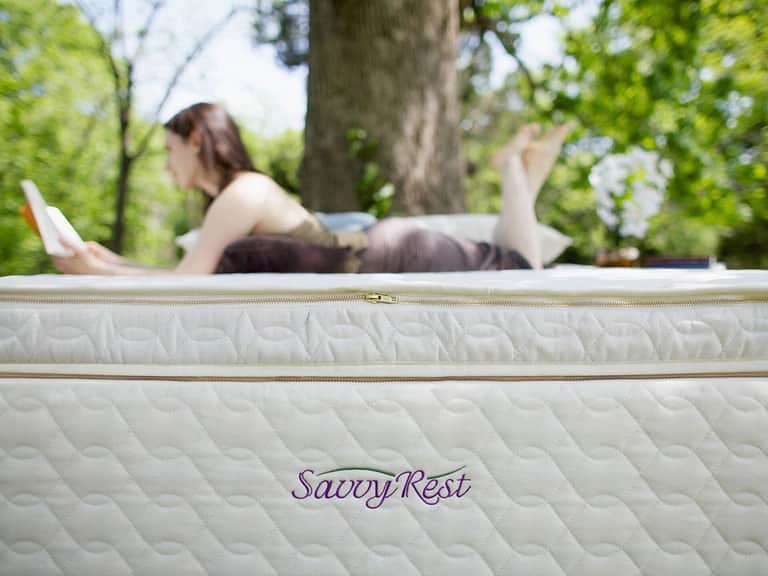
Savvy Rest Unity Pillowtop Latex Mattress
Savvy Rest Unity Pillowtop Latex Mattress — a 13-inch latex system with a pillowtop, featuring organic cotton casing and Dunlop/Talalay latex layers. This product is a practical example of a layered, customizable mattress that can incorporate certified organic materials.
Key features include 100% certified organic cotton outer casing, GOTS-certified latex options, and a 20-year warranty. The Unity Pillowtop illustrates how a mattress product can integrate organic components with modular design to address comfort preferences while aligning with eco-conscious standards.
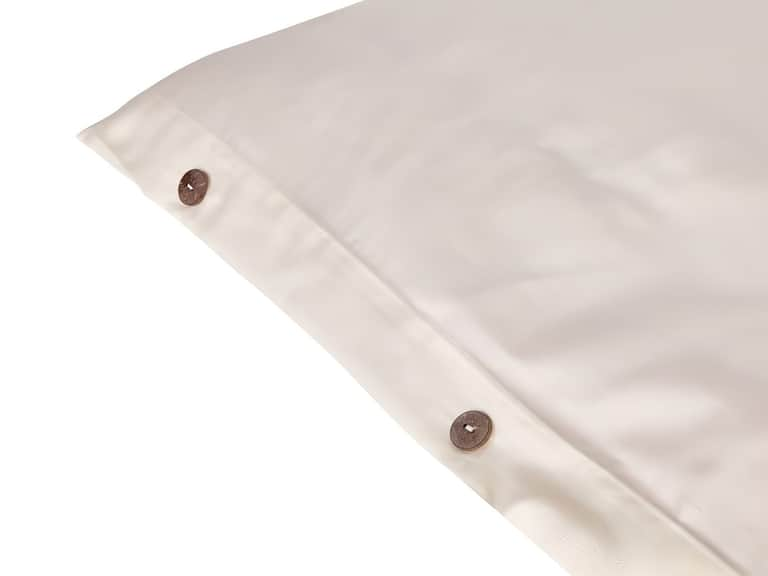
Sleep and Beyond Organic Cotton Duvet Cover Set
Sleep and Beyond Organic Cotton Sateen Duvet Cover Set, a 300-thread-count GOTS-certified cotton product designed for clean finishes and minimal chemical exposure in bedding.
This duvet cover set demonstrates how organic textiles extend beyond sheets to encompass complementary sleep surfaces, reinforcing a cohesive, certifiably safe sleep environment.
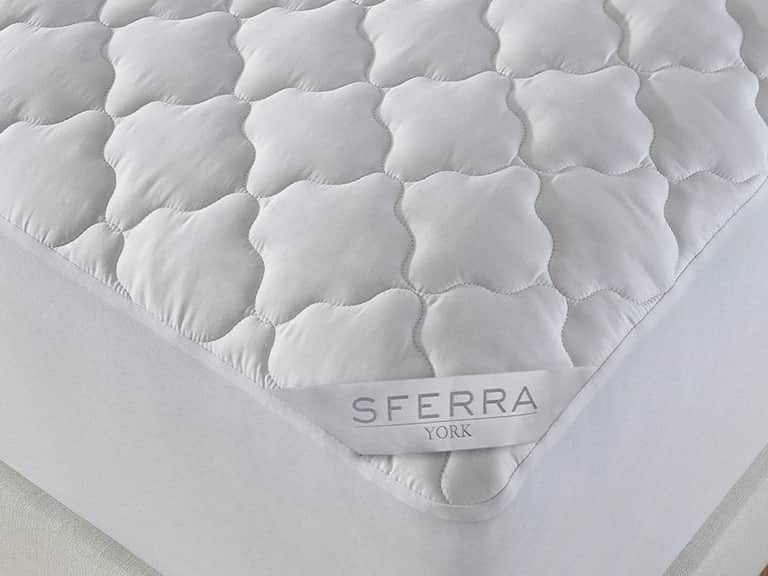
York Mattress Pad by Sferra
York Mattress Pad, a luxury down-alternative pad wrapped in 300TC cotton sateen. While not all components may carry an explicit certification, it demonstrates the integration of high-quality, breathable fabric and comfort-enhancing fill that complements certification-minded bedding ecosystems.
This product highlights how a well-made mattress pad interfaces with certified sheets and organic toppers to create an overall sleep system that prioritizes both comfort and health considerations.
A note on the Sleep and Beyond catalog and certification alignment
The Sleep and Beyond collection demonstrates how a brand can weave GOTS-certified textiles into a broader product suite, spanning sheets, duvet covers, and toppers. Certification programs must be read in context: one label on cotton textiles does not automatically certify the entire product's foam, adhesives, or finishes. As consumer demand for fully transparent disclosures grows, brands that publish certificate numbers and scope earn a higher degree of trust. In this article, we have illustrated how such disclosures may appear in practice, guiding readers to verify claims with primary certification bodies.
Conclusion: certifications as a compass for healthier sleep ecosystems
Understanding GOTS, GOLS, and GREENGUARD Gold empowers readers to curate sleep environments that are not only comfortable but also aligned with health and environmental stewardship. Certifications help translate laboratory rigor into everyday decisions, guiding you toward products that minimize chemical exposure, maximize breathability, and respect the ecosystems that sustain them. By approaching the market with a critical eye and a curiosity for transparency, you can assemble a sleep system that serves your wellbeing tonight and for years to come.